
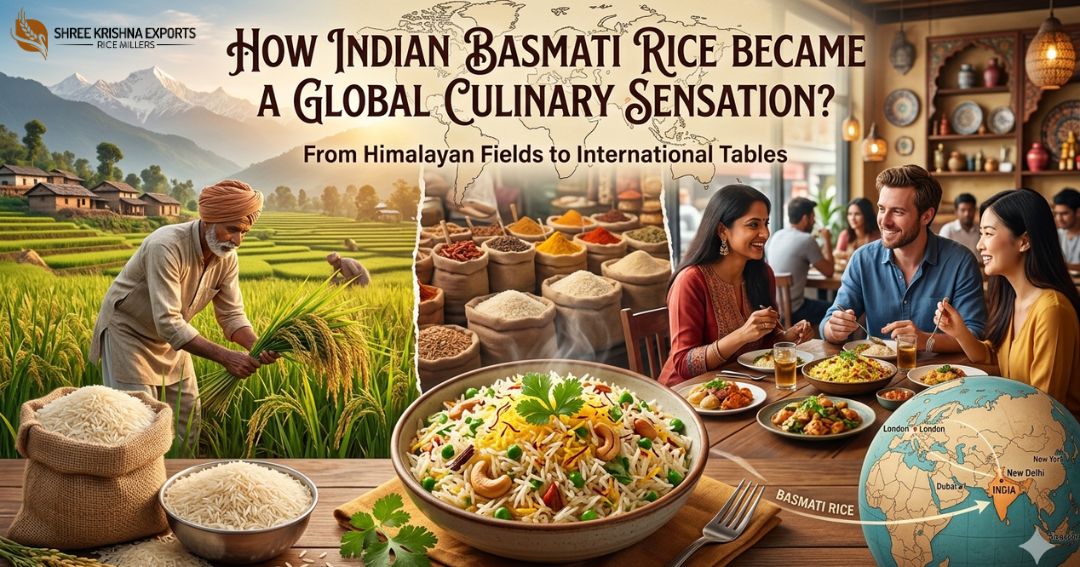
Rice is consumed as a staple food across the globe, but it is the Indian basmati rice that is titled as the “king of all rices”. It has a strong reputation not just in India but across the world. On the surface level, it has long grains, slender thickness, and a separable, non-sticky texture. But when we go deeper, we realize there are more layers that we can unpack about the basmati rice from India. Let’s examine some of the key factors behind its rise in the major parts of the world.
Geographical Factors
This is one of the obvious reasons. Geography plays a huge role in the growth and expansion of any agricultural product. India’s unique geography is a key reason behind the high-end value associated with basmati rice.
Fertile Land in Northern Indian Regions
The Himalayan foothills, where many rivers flow, create conditions for basmati rice cultivation. The Northern State regions are where the best basmati rice in India is grown. The parts of Haryana, Punjab and Uttar Pradesh have some of the most fertile lands. Its soil composition, climate and availability of water are essential for this rice.
Millennium-Old Farming Practices
Basmati rice is not a new crop that was discovered recently. It has been growing in India for thousands of years. The farmers have rich knowledge and the right skills which is required for the cultivation of this rice variety.
Traditional Significance
India is a country deeply rooted in culture, and basmati rice has found its place among the diverse Indian cultures. This aspect of basmati rice attracts chefs across the world who don’t just cook but also analyze cultural associations with food.
Valued As a Heritage
In India, basmati rice is not just a food that is consumed for energy. It has rich cultural significance. In many households, it is stored not for daily consumption but for special occasions to make pulao, eat with delicious curries and meat, and celebrate the joy of eating together.
Expansion By Global Trade
India is the largest exporter of Basmati rice, supplying markets in the Middle East, Europe, and North America. Countries such as the UAE and Saudi Arabia have become major consumers, where Basmati is a staple in daily meals.
Influence of the Indian Diaspora
Indian communities are spread across the globe. They significantly contribute to expanding the cultural elements, initiating the demand and the potential of basmati rice does the rest.
Consumer Preferences
A rising number of people are becoming conscious of what they consume. Besides being delicious, basmati rice is one of the healthiest types of rice. It has a lower glycemic index compared to other varieties.
Highly Compatible with Other Foods
Basmati rice absorbs the flavours well, mixes with spices, and has a subtle flavour of its own. It remains firm and non-sticky while being heated, pressurized or cooked with a variety of ingredients.
Conclusion
With its unique qualities, cultural significance, expansion by exports, and increased capacity of Indian farmers and manufacturers, basmati rice has been wholeheartedly adopted across global culinary traditions. With advancements in agricultural technology, numerous varieties of basmati rice are being traded. These varieties overcome the limitations of low yield, high maturity time, and crop loss due to diseases.