
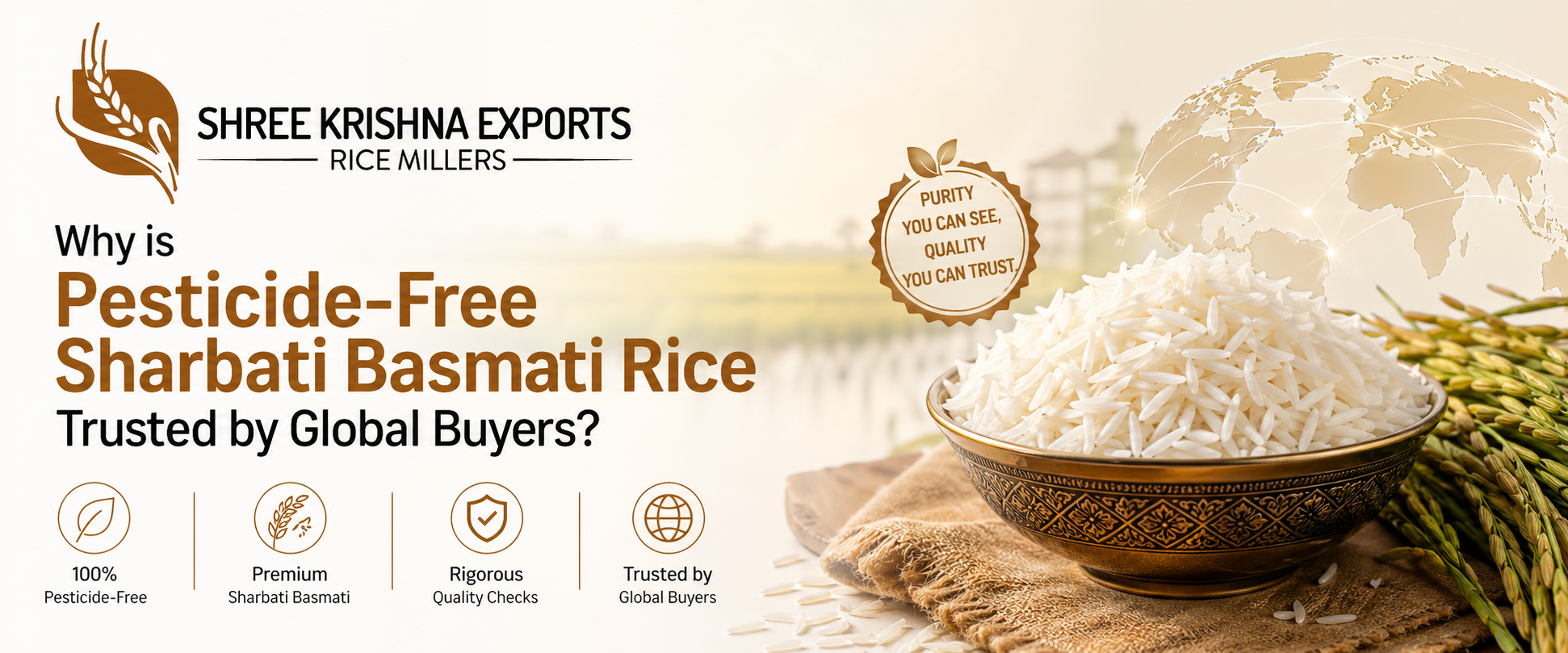
Indian rice varieties are one of the most appreciated, consumed and celebrated in the world. The diversity of rice produced in India is rare. Sharbati rice is one of the highly consumed rice varieties produced here. In recent years, it has gained popularity among global buyers as well. Let’s explore Sharbati rice and why it is loved so much.
Qualities of Sharbati Rice
Grown in the fertile plains of Madhya Pradesh, Punjab, Haryana, and Uttar Pradesh, pesticides free Sharbati basmati rice is a long-grain type of rice. It is often called the younger sibling of Pusa basmati rice due to its aromatic fragrance and grain size. Here are the key qualities of this rice:
- It features long and slender grains that are pearly white, or sometimes golden in sella varieties.
- Its grains separate after cooking.
- Valued for its non-sticky and fluffy texture.
- The price of this rice is lower than that of premium basmati, though there is less difference in quality.
- Ideal for both everyday meals and special dishes.
- Strong ability to absorb flavours while retaining its structure.
Why Pesticide-Free Rice
Pesticide residues in any grain are a big health concern. When consumed for a long period of time, it affects our metabolism, immune system and other chronic illnesses. Proven research has linked it to leukaemia, lymphoma, and brain, breast, prostate, and thyroid cancers. Therefore, the demand for pesticides free sharbati basmati rice is high among health-conscious consumers and it is also mandated by the regulatory bodies to trade rice that is free or has minimal pesticide residue.
How It Gained Global Popularity
Often called “common man’s basmati”, sharbati rice closes the gap between the premium, heritage basmati rice and standard everyday rice. As the Indian rice appeals to the global consumers, Sharbati has placed its distinct name. It provides an excellent experience at an affordable price. The highest demand for this rice comes from the Middle East (UAE, Saudi Arabia, Oman), Africa (Nigeria, Ghana), and portions of Asia-Pacific and Europe. In many Middle Eastern cuisines, the aromatic essence of rice is highly valued. Being a cost-effective variety, it suits the demands of developing African nations.
Role of Indian Exporters
Indian rice exporters like Shree Krishna Exports have a key role in the expansion of Sharbati rice to the global markets. Through strict quality-controlled processing, marketing and obtaining local licenses for trading, they supply this fragrant rice variety across the globe. Efficient logistics and customizable packaging complete the rest of the job.
Conclusion
Among the wide varieties of basmati and non basmati rice, Sharbati rice carries a special aura. It can be mixed with royal recipes, as well as consumed in daily meals. From biryani to dal chawal, the versatility of this rice is impressive. Pesticides free Sharbati basmati rice is a reliable choice for customers. Shree Krishna Exports provides this variety in Sella, steamed and raw forms in customizable sizes to meet specific demands.