
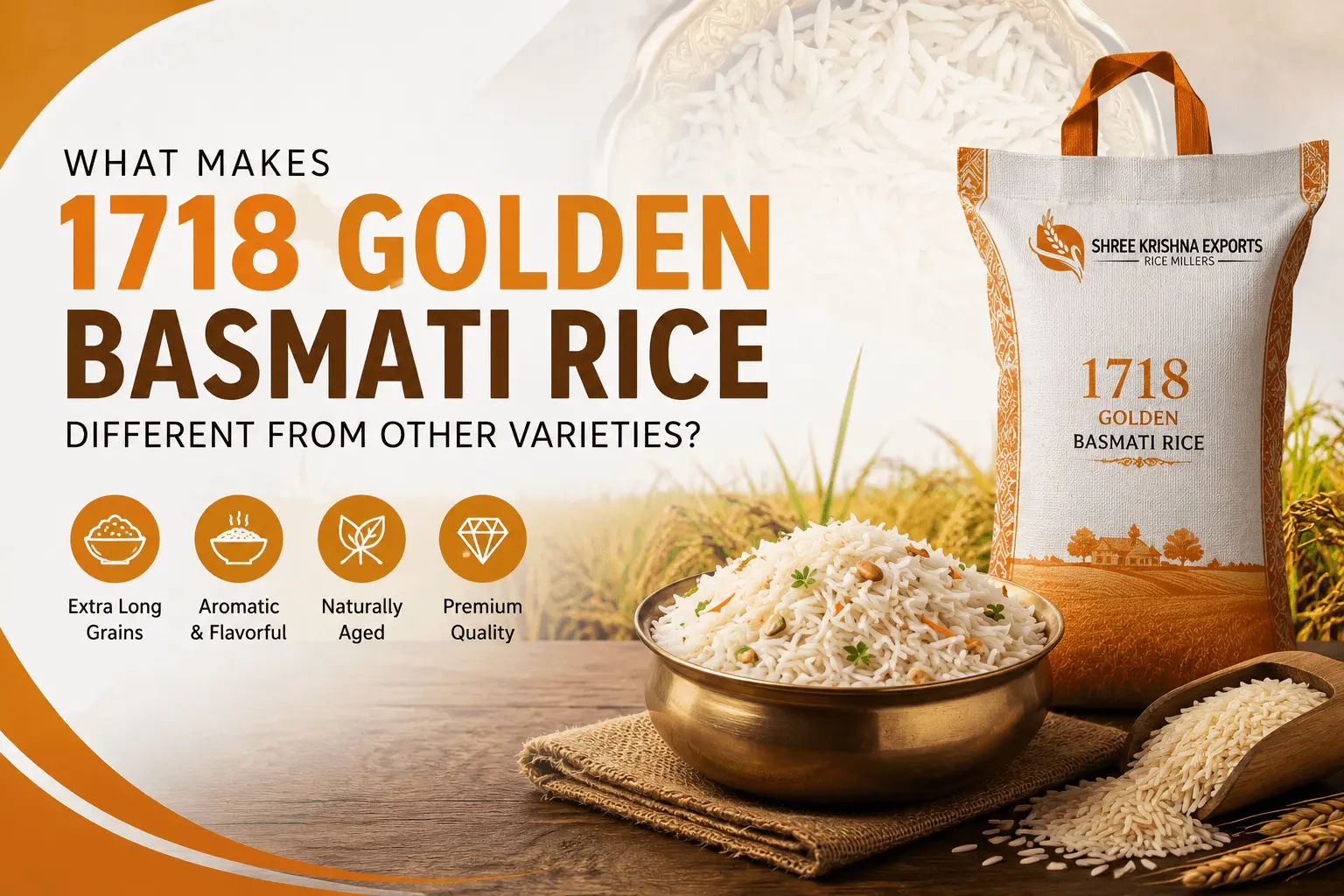
Different varieties of rice look the same in appearance before cooking, but their behavior in the kitchen is variable. The result depends on several factors including size and shape of the grains, aroma, and cooking mode. 1718 Golden Basmati Rice is considered one of the best examples of long grain rice as it has some special characteristics regarding the quality of grains and their performance in cooking.
1718 Golden Basmati Rice Explained
1718 Golden Basmati Rice belongs to the 1718 Basmati rice group and is characterised by its golden colour. The rice’s popularity is based on the fact that it possesses long and slender grains, a unique Basmati odour, and a perfect grain structure for various rice-based recipes. All while being more affordable than other long-grain basmati rice varieties.
Long Slender Grain
Appearance of the grains is one of the most important factors for buyers. 1718 Golden Basmati Rice has long, slender grains, contributing to the appealing look of the cooked rice. Properly processed and cooked rice grains do not get sticky, and each grain can be distinguished from the rest of the grains.
Less Resource Intensive
1718 rice was developed with bacterial blight resistance. For farmers, it proves to be beneficial because there is less crop loss due to diseases. It requires a lower amount of time to get mature. This translates into a price reduction for the buyers without compromising on the grain quality.
How Does It Differ from Other Long-Grain Rice?
Grain Length and Appearance
Basmati 1718 rice has distinguishing long size and thin grains that have nice appearance after cooking. Compared to types of short rice, 1718 rice appears to be more elongated than others, making it more desirable for dishes like biryani.
Processing and Colour
Processing creates one of the most noticeable differences. Golden Basmati rice has a distinctive golden-yellow colour that distinguishes it from white raw and white steam-processed varieties. The difference in color, texture, and cooking behavior can be attributed to parboiling and further processes.
Cooking Performance
Various varieties of Basmati rice react differently to soaking, boiling, and steaming. The 1718 variety is appreciated for its elongation during cooking while its grains remain separated.
Where to Use 1718 Golden Basmati
The combination of unique characteristics and affordability makes 1718 golden basmati a go-to choice for buyers who want premium quality at a reduced rate. It can be used in pulao and homemade biryani. It absorbs the variety of flavours quite well and doesn’t lose its form. Buyers in commercial kitchens also use it heavily to make steamed rice and other kinds of rice-based meals.
What Buyers Should Look For
the name of the rice variety is not sufficient when measuring its quality. Buyers should carefully analyse the physical quality and processing standards of the rice. Uniformity ensures cooking efficiency and proper appearance of the product. If the length and the shape of the grains differ considerably, they will not cook properly. A lower number of broken grains makes the rice visually more appealing and indicates higher quality of milling. Moisture is one of the factors influencing the cooking and shelf life of rice, which is why foreign particles and cleanliness level should be evaluated at the time of purchase of the 1718 Golden Basmati Rice.
Conclusion
One can distinguish 1718 Golden Basmati rice by examining its long grains, specific yellow colour, and unique aromatic quality while it is also inexpensive. Applications of Basmati 1718 rice are diverse and include usage in making biryani and other rice foods. Quality of rice aims to meet expectations of consumers, so they should verify characteristics of purchased rice such as size, content, and moisture. If you are looking for the best rice supplier, make sure you have contacted Shree Krishna Exports.